Why Spooky Feelings Both Scare and Comfort Us
A floorboard creaks at night, and suddenly your body reacts before your brain catches up. Your shoulders tense. Your ears sharpen. You may even hold your breath. Then, a second later, part of you enjoys it.
That strange mix is what makes spooky feelings so interesting. They are not pure fear. They are fear softened by distance, memory, imagination, and sometimes even pleasure. A spooky feeling can make a dark hallway seem dangerous, but it can also remind you of childhood sleepovers, pumpkin-scented porches, ghost stories, and staying up past bedtime with a flashlight under your chin.
Spookiness lives in the space between threat and comfort. That is why it sticks with us.
Spooky feelings begin when the familiar turns strange
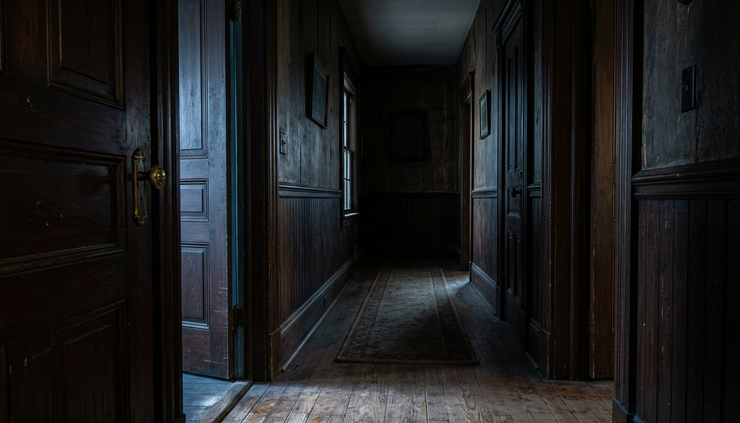
Spooky feelings often start with something we know well. A house. A doll. A family photo. A quiet street. Nothing about these things is scary on its own. The unease begins when they seem a little wrong.
Psychologists sometimes connect this to the “uncanny,” that uncomfortable feeling we get when something is almost familiar but not quite. A wax figure that looks nearly human. A voice in an empty room. A childhood toy sitting in a place where it should not be.
The brain loves patterns. It tries to explain what is happening around us quickly, especially in low light or uncertain situations. When it cannot settle on a clear answer, it raises the alarm.
That is why a coat hanging on a chair can become a person in the dark. It is why one odd sound in the basement can feel like a warning. Your mind fills in the blanks, and it often fills them with possibilities that helped our ancestors survive.
The spooky part is not always the object itself. It is the question behind it:
What if I am not alone?
Fear feels safer when we choose it
One reason spooky stories, haunted houses, and horror movies are fun is that they let us visit fear without truly living inside it. We get the racing heart, the goosebumps, the nervous laughter, and then we get to leave.
Movies use this beautifully. In The Sixth Sense, the fear comes from quiet rooms, half-seen figures, and the sadness of unfinished lives. In The Blair Witch Project, much of the dread comes from what we do not see. A pile of sticks can feel worse than a monster because our imagination keeps working after the scene ends.
Classic monster movies do something similar, but with a different flavor. Dracula gives fear a velvet cape and candlelight. Frankenstein turns the unknown into a lonely figure we fear and pity at the same time. These stories scare us, but they also invite us to feel for the creature in the shadows.
That is part of the comfort. Spooky stories give fear a shape. Once fear has a shape, even a ghostly one, it can feel easier to face.
Nostalgia softens the shadows
For many people, spooky feelings are tied to fall rituals: jack-o’-lanterns, candy bowls, chilly air, crunchy leaves, and old TV specials. The fear arrives wrapped in memory.
Maybe you remember reading Scary Stories to Tell in the Dark as a kid, half thrilled and half convinced you should not turn the page. Maybe Goosebumps books (yes, I'm that old, lol), made your school library feel like a portal to danger. Maybe Halloween night felt magical because the normal rules changed. Neighbors became witches. Front yards became graveyards. You were allowed, for a few hours, to be someone else.
That is why a plastic skeleton in a store can create a tiny emotional time warp. It is not just decoration. It pulls up memories of who you were when the world felt bigger, darker, and more mysterious.

Personal memories add another layer. I still remember being young and hearing a branch scrape against a window during a windy night. I knew, logically, that it was a branch. That did not stop me from imagining long fingers tapping on the glass. The next morning, the same branch looked harmless. The fear had vanished, but the memory stayed because it had a story attached to it.
That is how spooky nostalgia works. The fear fades. The atmosphere remains.
Spookiness changes how we act
Spooky feelings do not just stay in the mind. They guide behavior in small, noticeable ways.
When we feel spooked, we may:
Walk faster down a quiet street.
Turn on more lights than usual.
Avoid looking into mirrors at night.
Sleep with a closet door fully shut.
Call or text someone just to feel connected.
Laugh too loudly after a scary moment to break the tension.
These reactions make sense. Spookiness heightens attention. It makes us scan for danger, even when we are safe. It also pulls us toward other people. Think about how often scary movies become group experiences. People watch through their fingers, grab a friend’s arm, joke after a jump scare, and relax together once the credits roll.
Fear can isolate us, but spooky fear often does the opposite. It becomes social. We tell the story later. We add details. We ask, “Has anything like that ever happened to you?”
That shared storytelling is ancient and deeply human. Around campfires, at sleepovers, on long drives, or in comment sections, spooky stories help us test fear while staying connected.
Literature keeps proving that atmosphere matters
Some of the best spooky writing does not rush to explain everything. Edgar Allan Poe understood this. In stories like “The Tell-Tale Heart” and “The Fall of the House of Usher,” the terror grows from mood, obsession, sound, and decay. The reader feels trapped inside a mind that cannot calm down.
Shirley Jackson’s The Haunting of Hill House works in a similar way. The house feels wrong before anything dramatic happens. Its power comes from suggestion. Is the haunting real? Is it psychological? The uncertainty is the point.
Spooky literature reminds us that fear does not need sharp teeth. Sometimes it only needs a locked door, a whisper, or a sentence that makes the room feel colder.
We like spooky feelings because they let mystery back in
Everyday life asks us to explain, schedule, plan, and solve. Spooky feelings resist that. They bring mystery back into ordinary spaces.
A dark attic is just an attic, until it becomes a place where forgotten things wait. A foggy road is just weather, until headlights turn it into a scene from a ghost story. A silent house is just quiet, until the quiet feels like it is listening.
That does not mean we truly want danger. Most of us want the feeling of danger with a safe way out. We want the shiver, then the lamp. The ghost story, then the warm drink. The haunted house, then the parking lot.
Spooky feelings scare us because they wake up old survival instincts. They comfort us because they are wrapped in memory, imagination, and shared ritual.
So here is the fun part: what is your spookiest memory? A strange sound, an eerie place, a movie that stayed with you, or a moment you still cannot fully explain? Share your story in the comments. Someone else may read it with the lights on and feel that familiar little chill.
-Lacey D.


Comments